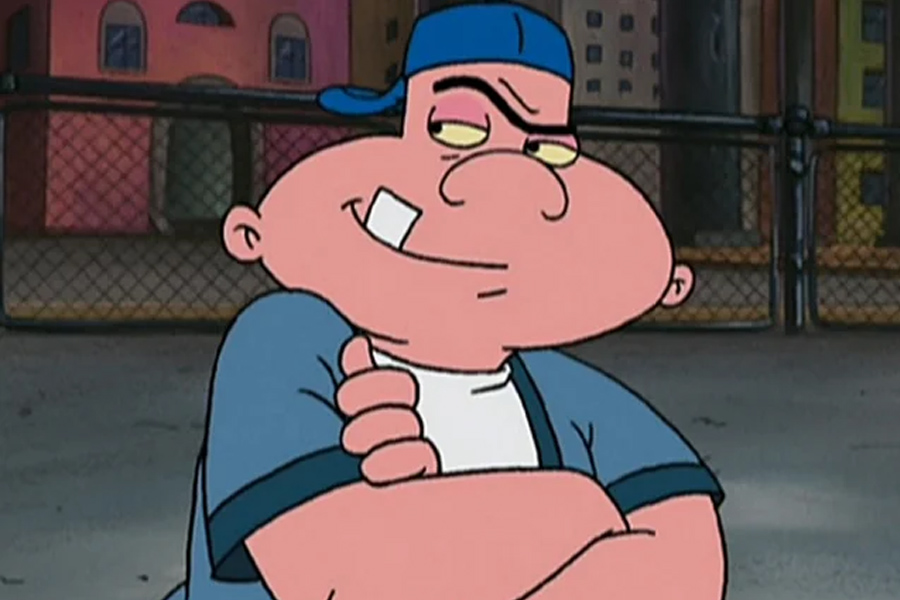
Basic Information About Harold
I often think of Harold as one of the most layered characters in animated television, a boy who feels larger than life yet deeply human. To ground my understanding, I lay out his essential details below.
| Attribute | Details |
|---|---|
| Full Name | Harold Berman |
| Series | Hey Arnold! |
| Creator | Craig Bartlett |
| School | P.S. 118 |
| Age | Around 13 during Bar Mitzvah |
| Heritage | Jewish American, Eastern European roots |
| Personality | Loud, insecure, emotional, loyal |
| Best Friends | Sid, Stinky Peterson |
| Love Interest | Patty Smith |
| Notable Trait | Tough exterior with soft inner core |
| Early Work Experience | Apprentice at Green’s Meats |
A Boy Behind the Bluster
I see more than a boisterous youngster with a unibrow and a booming voice in Harold. A storm cloud brings rain and thunder. The story begins with him braggarting and bullying his classmates. Despite the noise, something delicate exists.
I see him lose confidence soon. Sometimes he acts invincible, then he calls out for his mother in fear. That difference defines him. Not only rude or ignorant. The youngster builds armor from noise and attitude to defend himself from the world.
His weight issues complicate everything. Comfort and identity come from food. His love of meat is almost symbolic, like he clings to something real in an uncertain world. He gradually confronts these insecurities, not flawlessly but honestly.
Growth Through Friendship
I find Harold’s friendships to be the soil where his better self grows. Sid and Stinky stand beside him like loyal shadows, often joining him in trouble but also sharing moments of vulnerability. Together, they form a trio that feels messy and real.
Arnold plays a different role in his life. I see Arnold as a quiet compass, always pointing Harold toward something better. Harold resists at times, but he listens. Slowly, his sharp edges soften. The bully becomes a companion. The loud voice learns to care.
His relationship with Patty Smith stands out to me as a turning point. When Harold connects with her, I sense a shift. He is no longer hiding behind bravado. He allows himself to be seen. That moment feels like watching a wall crack open, letting light through.
Family Life and Emotional Foundations
Harold’s home life reveals the roots of his behavior. I imagine his household as warm yet imperfect, filled with love but also tension.
Jerry Berman: The Quiet Judge
His father, Jerry, carries a calm presence. His deep voice suggests stability, yet I notice a certain distance. He worries about Harold’s weight and appearance, sometimes focusing more on how Harold looks than how he feels. This creates a subtle pressure, like a weight Harold carries silently.
Marilyn Berman: The Protective Heart
His mother, Marilyn, feels more expressive. She scolds, worries, and comforts in equal measure. I see her anxiety when Harold runs away or struggles. She pushes him socially, urging him to participate and grow. Her love is loud, sometimes overwhelming, but always present.
Extended Family Influence
There are hints of a broader family world. An uncle with an alligator farm adds a touch of humor and unpredictability. Mentions of relatives create a sense that Harold belongs to a larger network, even if we only glimpse parts of it.
These family dynamics shape him deeply. I see a boy caught between expectations and acceptance, trying to figure out who he is within that space.
Cultural Identity and the Bar Mitzvah Moment
One of the most powerful chapters in Harold’s story unfolds during his Bar Mitzvah. I view this event as more than a ceremony. It is a mirror held up to his fears.
At 13, he stands on the edge of childhood and responsibility. The idea of becoming a man terrifies him. I can almost feel his anxiety as he tries to escape that moment, running away to avoid growing up.
Yet, what moves me most is how he unknowingly lives the lessons he fears. He helps others. He shows kindness. He acts with courage. Without realizing it, he becomes the person he doubts he can be.
When he finally returns and completes the ceremony, I do not see a perfect transformation. I see progress. He still cries. He still stumbles. But he has taken a step forward, and that step matters.
Work, Responsibility, and Self Discovery
Harold’s butcher business experience was important. After stealing a ham, he must face consequences. Instead of punishment, he seeks meaning.
At Green’s Meats, he finds a peculiar but sincere passion. He can use his energy at the shop. I think this is when guilt becomes progress.
Not about the job. Concerning accountability. Harold discovers that honest mistakes can lead to opportunities. His story reflects that lesson.
Personality Traits That Define Him
When I break Harold down into traits, I see a mix that feels almost contradictory, yet perfectly human.
- He acts tough but fears rejection.
- He boasts loudly but doubts himself deeply.
- He can be selfish yet shows surprising generosity.
- He cries easily yet stands up when it matters.
These traits make him feel real to me. He is not a simple character. He is layered, like an onion, each layer revealing something new.
Timeline of Change
I like to think of Harold’s journey as a gradual unfolding.
- Early years show him as a bully, loud and insecure.
- Middle episodes reveal cracks in his persona, moments of kindness.
- Key events like the Bar Mitzvah and butcher shop push him toward growth.
- Later appearances highlight loyalty, empathy, and emotional depth.
This progression feels natural. He does not change overnight. He evolves, just like a real person would.
FAQ
Who is Harold in Hey Arnold?
I see Harold as a supporting character who begins as a bully but evolves into a loyal and caring friend. He is one of Arnold’s classmates at P.S. 118 and becomes a central part of the group dynamic.
What makes Harold unique as a character?
What stands out to me is his emotional contrast. He combines loud confidence with deep insecurity. This duality makes him feel authentic and relatable.
How does Harold’s family influence him?
His family provides both support and pressure. His father focuses on appearance, while his mother offers emotional care. Together, they shape his struggles and growth.
What is the significance of Harold’s Bar Mitzvah?
I view it as a turning point where Harold confronts the idea of growing up. It highlights his fears, but also shows that he is capable of responsibility and kindness.
Does Harold have any career direction?
While still a child, his experience at the butcher shop suggests a potential future in trade work. More importantly, it teaches him responsibility and self worth.
How does Harold change over time?
He transitions from a bully to a more compassionate and loyal friend. His growth is gradual, marked by moments of self realization and emotional honesty.