A Chicago Beginning, A Stage First Life
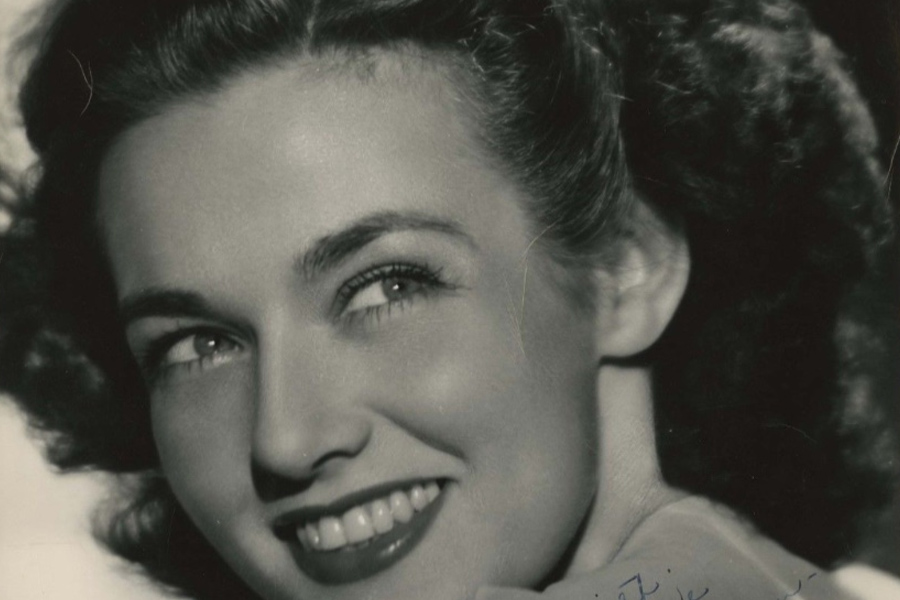
I see Rita Oehmen as one of those names that arrives softly, like a spark drifting through theater smoke, and then suddenly opens into a whole family story. She was born in Chicago in 1917, and her early life seems to have taken shape inside the city’s restless performance world. Chicago was a place of motion, music, and stage lights, and Rita fit that atmosphere with ease. She was not only an actress in the narrow sense of the word. She was a vaudeville performer, a dancer, and part of the kind of live entertainment culture that trained artists to move quickly, charm instantly, and hold an audience with nothing but timing and presence.
Her earliest public identity was tied to performance with her brother Edward Oehmen. Together they were known as the Oehmen Twins, a name that sounds like it belongs to a marquee glowing on a rainy night. That partnership matters because it places Rita at the center of a working act, not just a passing appearance. She was part of a stage tradition where siblings often carried the same rhythm, the same discipline, and the same hunger for applause. By the mid 1930s, she was already being noticed in entertainment coverage, which suggests that her work had enough polish to travel beyond local rooms and into the broader vaudeville circuit.
Edward Oehmen and the Oehmen Twins
Edward Oehmen was Rita’s brother and her early performing partner. Together they formed the Oehmen Twins, a dance act that represented both family and craft. In vaudeville, a sibling act had an advantage. There was trust, sync, and an almost invisible shorthand between two people who had likely rehearsed the same steps until they became instinct. I imagine their performances as fast and precise, with the kind of polish that makes a difficult routine look effortless.
Edward’s place in Rita’s story is more than a family note. He was the first important artistic partner in her life. Before film, before the later family fame, there was this shared stage identity. That detail gives Rita’s life a strong opening scene. It tells me she did not begin as a lone figure waiting to be discovered. She began as part of a pair, moving through the bright machinery of live entertainment with her brother beside her.
Brian Farnon and the Marriage That Joined Two Creative Worlds
Rita later married Brian Farnon, a musician, arranger, and bandleader. Their marriage brought together two branches of performance life, stage and music, live movement and musical structure. Brian was not simply a spouse in the background. He was a working artist with his own career, and that made the household a creative one.
The marriage connected Rita to a family that would become widely known in entertainment history. In 1941, she and Brian Farnon were married, and the family would later expand into a well known set of daughters whose names became familiar to film and television audiences. Their relationship, as described in family histories and later recollections, was part of a larger mid century story in which performance ran through the home like electricity through a wire. Rita and Brian were not just raising children. They were raising future performers.
Shannon Farnon, Charmian Carr, and Darleen Carr
Shannon Farnon, Charmian Carr, and Darleen Carr were Rita’s children. In her own way, she became famous and carried the family’s artistic legacy.
The oldest was Shannon Farnon. Born in 1941, she was an actress and voice actress who performed Wonder Woman’s initial Super Friends voice. Her path resembles her mother’s, albeit in a different media. Live performances featured Rita dancing and acting. Shannon entered the microphone age, when voice was as important as gesture.
In 1942, Charmian Carr was born and became the most famous of the three for playing Liesl in The Sound of Music. She appeared peaceful, but underneath that appearance was the same familial current that began with Rita and Edward in vaudeville. As Charmian became famous, the Oehmen Farnon family became immortalized. She connected vintage Hollywood to its kinder, more personal family story.
Darleen Carr, the youngest, was born in 1950 and acted. Her cinematic and vocal work enriched the family tapestry. The family produced no single star. It created a group of performers who navigated the same landscape differently. That is odd enough to feel genetic, like a tune passed down and changed.
Rita Oehmen on Screen
Rita’s screen career was brief, but it was real and worth noticing. She appeared in The Jam Session in 1937, Go Chase Yourself in 1938, and Gun Law in 1938. These credits show a performer who moved from stage life into film at a time when many vaudeville artists were making that transition. The camera often took the place of the theater curtain, and Rita stepped through that doorway without losing the identity she had built.
Gun Law stands out as the most memorable of those appearances. In the cast, Rita played Ruth Ross. The role was part of a Western setting, and even in a small filmography, that credit gives her a clear place in film history. I think of her screen work as a handful of polished stones rather than a long shoreline. Small, but distinct. Not every performer leaves behind a large list of credits. Some leave behind a sharper silhouette.
The Shape of Her Personal Life
Rita’s personal life seems defined by family, performance, and home. One obituary called her the “loveliest mother of Chicago,” implying public adulation for her beauty, kindness, style, and presence. This reminiscence shows celebrity’s tender side, which is important. It claims she was a performer, local hero, and affectionate figure.
Brian Farnon and she divorced in 1957. The familial line they built shaped Rita’s legacy. One of her enduring effects may be that her children’s careers preserved her name in performance. Parents can leave a stage and be heard in later curtain calls.
Rita Oehmen Family at a Glance
| Family Member | Relationship to Rita | Notable Identity |
|---|---|---|
| Edward Oehmen | Brother | Vaudeville and dance partner in the Oehmen Twins |
| Brian Farnon | Spouse | Musician, arranger, and bandleader |
| Shannon Farnon | Daughter | Actress and voice performer |
| Charmian Carr | Daughter | Actress known for The Sound of Music |
| Darleen Carr | Daughter | Actress and voice performer |
Legacy and Public Memory
A long film list or many interviews do not define Rita Oehmen. Its foundation is smaller, more personal endurance. She was in vaudeville, where time was everything and performances had to flower swiftly. Her family grew exceptionally wealthy in entertainment skills. Her life combines theater tradition, Hollywood change, and family inheritance.
I think that makes Rita intriguing. She is more than her children’s fame. She is the tree’s underground root. Without her Chicago stage and film experience, Shannon, Charmian, and Darleen’s story makes no sense. Without Edward, Brian, or the daughters continuing the family name into new eras, her story is incomplete.
FAQ
Who was Rita Oehmen?
Rita Oehmen was a Chicago born vaudeville performer and actress, active in the 1930s, who later became known as the mother of Shannon Farnon, Charmian Carr, and Darleen Carr.
Who were Rita Oehmen’s family members?
Her brother was Edward Oehmen. Her spouse was Brian Farnon. Her children were Shannon Farnon, Charmian Carr, and Darleen Carr.
What was Rita Oehmen known for in her career?
She was known for vaudeville performance with Edward Oehmen as the Oehmen Twins and for appearing in films such as The Jam Session, Go Chase Yourself, and Gun Law.
Was Rita Oehmen part of a performing family?
Yes. Her own stage work was linked to her brother, and her children became performers as well, making the family a multi generational entertainment family.
Which of Rita Oehmen’s children became the most widely recognized?
Charmian Carr is often the most widely recognized because of her role in The Sound of Music, though Shannon Farnon and Darleen Carr also had notable entertainment careers.
What makes Rita Oehmen’s story notable?
Her story blends vaudeville, film, marriage into a musical family, and the rise of three performer daughters. She stands at the center of a family line that carried stage energy across generations.